


Demand-based certificate per §81 GEG
With this type of certificate, the building’s energy demand is calculated using a fairly involved procedure. This certificate is generally required if the building does not meet the requirements of the 1977 Thermal Insulation Ordinance, or, for example, if it is being brought back into use after a long vacancy.
Consumption-based certificate per §82 GEG
This certificate is issued based on recorded final energy consumption. The consumption data used must be based on at least the billed amounts from a continuous 36-month period, including the most recent billing period, which must not have ended more than 18 months ago. Renovation measures on your building may, under certain circumstances, help meet the requirements.
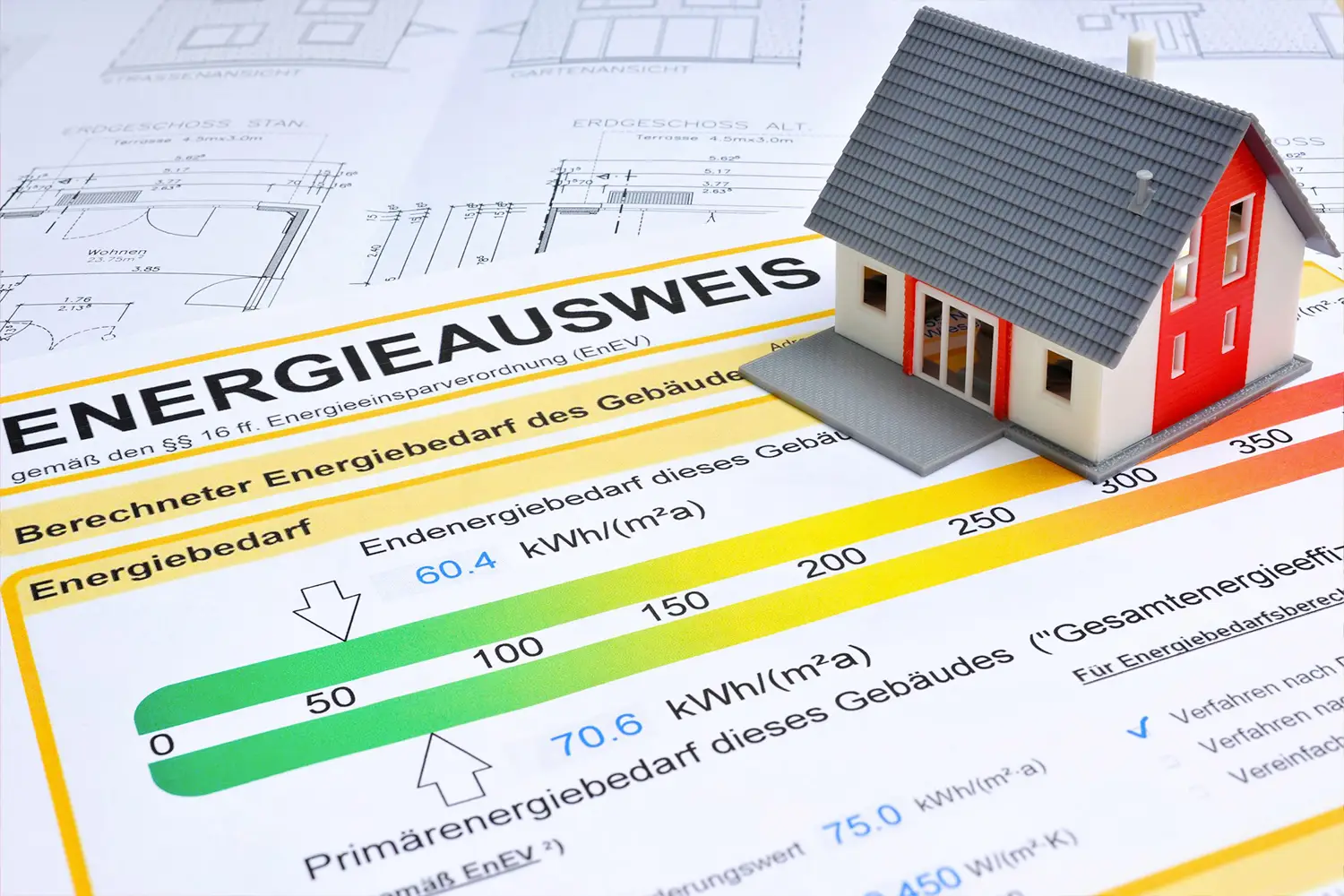
From the Buildings Energy Act to the Buildings Modernization Act: what’s changing for the energy certificate
The Buildings Energy Act (GEG) — known to many as the “heating law” — is being replaced. On July 10, 2026, the German Bundestag and Bundesrat passed the Buildings Modernization Act (GModG). It transposes the European Energy Performance of Buildings Directive (EPBD) into German law and brings noticeable changes for the energy certificate as well. The revised rules for the energy certificate are expected to take effect in early 2027.
What’s changing for the energy certificate:
New, EU-wide uniform efficiency scale: Instead of the current German classes A+ through H, a uniform scale from A to G will apply going forward. Class A represents zero-emission buildings, while Class G covers the energetically worst 15% of the building stock.
Consumption-based certificates only for residential buildings: For non-residential buildings, only the more elaborate demand-based certificate will be permitted going forward. Pure consumption-based certificates will be reserved exclusively for residential buildings.
Higher requirements for the underlying data: For consumption-based certificates, the requirements on the underlying consumption data will increase, with the aim of making the certificates more meaningful.
Additional information in the certificate: New additions include, among other things, the share of renewable energy generated on-site and information on the building’s life-cycle emissions.
Expanded modernization recommendations: For all buildings that do not reach Class A (zero-emission buildings), modernization recommendations are to become mandatory going forward.
New: the renovation passport: In addition to the energy certificate, a so-called “renovation passport” is planned, which will show a concrete roadmap for reaching zero-emission standard — comparable to today’s individual renovation roadmap (iSFP).
Listed/heritage buildings: the exemption rule is being narrowed
Until now, listed buildings have generally been exempt from the energy certificate requirement under §105 GEG — anyone selling or renting out a listed building currently does not need to provide an energy certificate. Likewise, renovation measures may deviate from the GEG’s energy requirements if compliance would impair the historic building fabric or appearance.
This is likely to change with the GModG: based on current information, the previous blanket exemption from the energy certificate requirement for listed buildings will be eliminated. The reason is the European Energy Performance of Buildings Directive (EPBD), which still allows exemptions for listed buildings but requires member states to apply a narrower, case-by-case review instead of an automatic exemption. In practice, this means that an energy certificate could in the future be required even for a listed building upon sale or rental, while relief for the energy renovation itself is expected to remain, albeit in a reduced form.
Since the exact design of this rule has not yet been finalized, we recommend that owners of listed properties keep an eye on further developments and seek advice early.
What stays the same
Energy certificates already issued retain their normal validity of 10 years from the date of issue — even beyond the date the law changes. An energy certificate issued today under the GEG therefore does not automatically lose its validity once the GModG takes effect.
Our recommendation
Since the new requirements for energy certificates are expected to take effect at the start of 2027, it may be worthwhile to have an upcoming energy certificate prepared under the currently applicable, established rules. Feel free to contact us — we’ll advise you on the right timing for your project.
Note: The exact design of the transitional provisions and detailed requirements will only be finally clarified once the relevant implementing regulations are published. This text will be updated as new information becomes available.
We use cookies to personalize content, provide social media features, and analyze our traffic. We also share information about your use of our site with our analytics partners. You can change your preferences at any time. For more information, please see our Privacy Policy and Cookie Policy.